Historic fight
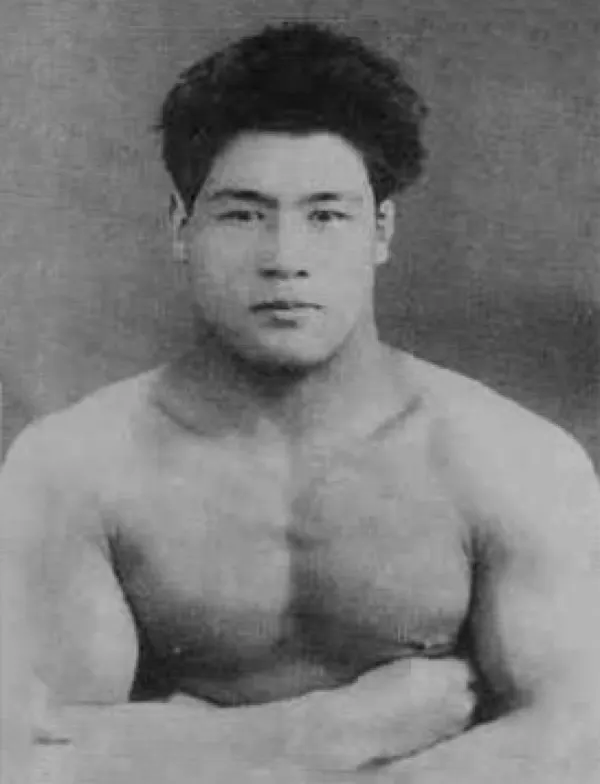
Hélio Gracie x Kimura: How the 1951 Fight at Maracanã Went
What sons, students and researchers said about the defeat that became the most famous fight in jiu-jitsu history.
By Gabriel Guimarães, jiu-jitsu black belt and instructor · updated Nov 21, 2026 · 3 min read
- When
- 1951, according to Pedro Valente
- Where
- Maracanã, Rio de Janeiro
- Fighters
- Hélio Gracie, Masahiko Kimura
- Result
- Kimura won. According to Francisco Mansur, Carlos Gracie threw in the towel to save his brother's arm.
Of all of Hélio Gracie's fights, this is the one that appears most in the interviews I read. And it appears in a curious way: nobody speaks of it as a victory, because it was a defeat, and yet almost everyone tells it with pride. I put together here what each person said, with the name of who said it.
Pedro Valente said his grandfather, Dr. Syllo Valente, took his father, still a boy, to watch the fight at Maracanã in 1951, shortly after the stadium opened for the 1950 World Cup. That boy began training soon afterward.
Why Hélio accepted a fight he knew he would lose
According to Pedro Valente, Hélio had retired at 25 and had his last fights in 1937. He came back in the 1950s to face Kimura.
Rorion Gracie, Hélio's son, gave the explanation I like most. He said his father challenged Kimura knowing he had no chance of winning. He wanted to see up close what the world champion knew.
“He was curious to know, after 20-odd years practicing jiu-jitsu, what the world champion would do that he didn't know.”
Rorion Gracie, on Pura Connection · 0:12:14 · translated from Portuguese · read the article
Paulão Filho is along the same lines. For him, Hélio was the cornerstone of jiu-jitsu precisely because of the courage to face Kimura knowing he would lose.
How the fight went
The most detailed version came from Francisco Mansur, who was Hélio's student for decades. According to him, Kimura promised to consider Hélio the champion if he lasted three minutes. Hélio lasted much longer, until Carlos Gracie threw in the towel to save his brother's arm. And Hélio, Mansur says, told him afterward that he wasn't going to tap.
“He said to me: I wasn't going to tap, I wasn't going to give him that satisfaction.”
Francisco Mansur, on Pura Connection · 0:38:34 · translated from Portuguese · read the article
Robert Drysdale looks at the fight with a researcher's eye and draws attention to something else: against Kimura, Hélio traded standing instead of pulling guard. To Robert, this shows that the centrality of the ground, which today defines jiu-jitsu, came later. Anyone who wants the full discussion will find it on the page about jiu-jitsu and judo.
The only one who beat Hélio
Pedro Valente defends Hélio against those who say he wasn't a good fighter with a simple argument: nobody beat him in his time.
“The only one who won was Kimura, in a later phase, in the 1950s.”
Pedro Valente, on Connect Cast · 1:07:07 · translated from Portuguese · read the article
He also recalls that, shortly afterward, Hélio fought Waldemar Santana over a personal matter, a fight he regretted. That story is told in Hélio Gracie x Waldemar Santana.
What came after
The defeat earned respect from both sides, from what they say. Francisco Mansur stated that Kimura confessed he had never faced an opponent like Hélio, and said he kept a document from the Japanese government offering Hélio a job teaching in Japan. Pedro Valente said Hélio was the first Brazilian to receive a judo black belt, given by Jendo, the Japanese fighting federation of São Paulo, for his results against Japanese black belts like Kimura.
Mansur also cited Mauro Gonzaga, who according to him also fought Kimura. And judoka Oswaldo Simões put Hélio's challenge with Kimura on the list of challenges that marked the fights in Rio de Janeiro.
For Robert Drysdale, the fight was a media high point, and after it jiu-jitsu entered a long phase of obscurity. He sees in that Carlos and Hélio's greatest contribution: resistance.
“Those guys spent 40 years in obscurity, from the Kimura fight to Royce.”
Robert Drysdale, on Connect Cast · 2:57:53 · translated from Portuguese · read the article
By Robert's count, that phase only ended with Royce at the first UFC. To see where this fight fits in the rest of the story, you can follow the timeline. The full conversations are in Francisco Mansur's interview, Rorion Gracie's and Pedro Valente's.
What was said
According to Pedro Valente, his grandfather took his father, still a boy, to watch the fight between Hélio Gracie and Kimura at Maracanã in 1951.
With Pedro Valente (pai), Hélio Gracie, Masahiko KimuraTold by Pedro Valente on Pura Connection · 0:05:26 · read the articleAccording to Pedro Valente, Hélio Gracie fought his last fights in 1937 and only returned in the 1950s, and the only man who beat him was Kimura, already in that later phase.
With Masahiko KimuraTold by Pedro Valente on Connect Cast · 1:07:07 · read the articleAccording to Pedro Valente, Hélio Gracie retired at 25, came back in the 1950s to fight Kimura and later fought Waldemar Santana over a personal matter, a fight he regretted.
With Waldemar SantanaTold by Pedro Valente on Connect Cast · 1:51:09 · read the articleAccording to Rorion Gracie, Hélio challenged Kimura knowing he had no chance of winning, because he wanted to know, after more than 20 years of practice, what the world champion would do that he didn't know.
With Masahiko KimuraTold by Rorion Gracie on Pura Connection · 0:12:14 · read the articleAccording to Paulo Filho, Hélio Gracie was the cornerstone of jiu-jitsu: he faced Kimura knowing he would lose, fought 3 hours and 40 minutes with Waldemar Santana, and was Carlson's teacher.
With Waldemar Santana, Carlson GracieTold by Paulão Filho on Pura Connection · 0:40:56 · read the articleAccording to Francisco Mansur, Kimura promised to consider Hélio the champion if he lasted three minutes; Hélio lasted much longer, Carlos threw in the towel, and Hélio told Mansur he wasn't going to hit.
With Masahiko Kimura, Carlos GracieTold by Francisco Mansur on Pura Connection · 0:38:34 · read the articleRobert Drysdale recalled that, against Kimura, Hélio Gracie traded on his feet instead of pulling guard, which to him shows that the centrality of ground fighting came later.
With Masahiko KimuraTold by Robert Drysdale on Connect Cast · 0:41:47 · read the articleFrancisco Mansur stated that Kimura confessed he had never faced an opponent like Hélio Gracie and that he has a document from the Japanese government offering Hélio work teaching in Japan.
With Masahiko KimuraTold by Francisco Mansur on Connect Cast · 1:41:12 · read the articleAccording to Pedro Valente, Hélio Gracie was the first Brazilian to receive a judo black belt, given by Jendo, the São Paulo federation of Japanese martial arts, for his results against Japanese black belts such as Kimura.
Told by Pedro Valente on Connect Cast · 1:44:27 · read the articleAccording to Francisco Mansur, Mauro Gonzaga fought Kimura and Waldemar Santana.
With Masahiko Kimura, Waldemar SantanaTold by Francisco Mansur on Connect Cast · 0:57:09 · read the articleOswaldo Simões cited the challenge matches in Rio de Janeiro in which professor Hermanny, of capoeira, took part, and Hélio Gracie's challenge with Kimura.
With Hélio Gracie, Masahiko KimuraTold by Oswaldo Simões on Pura Connection · 0:43:33 · read the articleAccording to Robert Drysdale, the greatest contribution of Carlos and Hélio was the endurance of spending about 40 years in obscurity, from the Kimura fight to Royce, believing jiu-jitsu would work out.
With Hélio Gracie, Masahiko Kimura, Royce GracieTold by Robert Drysdale on Connect Cast · 2:57:53 · read the article
This page brings together what was said across several interviews. Each claim belongs to whoever said it and links to the minute of the video. Spotted a mistake? Ask for a correction.