
Biography
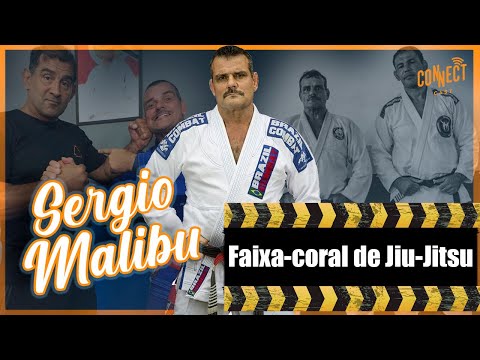
Sérgio Malibu
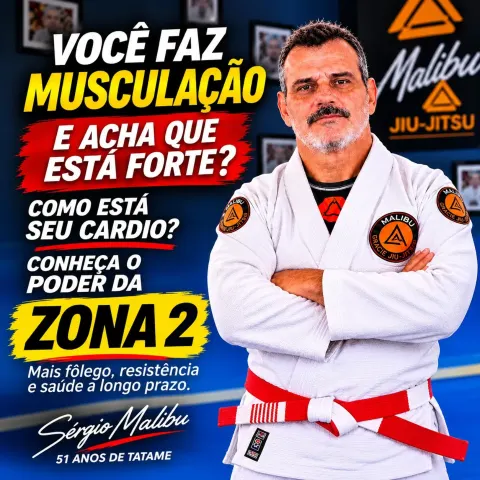
Sérgio Malibu is a jiu-jitsu coral belt and a surfer, a student of Rolls Gracie and Rickson Gracie in Rio. Feu says Malibu was raised alongside the Gracies and is like a father to him today.
Malibu says he started surfing at 13 at Arpoador, in the early 1970s. He had tried jiu-jitsu as a kid, brought by his mother to the Barreto family, but didn't take to it. The turning point came at 17, in São Conrado: his surfboard, lent to his friend Foca, hit the head of a 130-kilo Hawaiian, who broke the board with the fin. Shortly afterward he saw Rickson beat the Hawaiian with ease and understood right there that the technique worked.
His first teacher was Crolin Gracie, in Barra, and Álvaro Romano convinced him to go train with Rolls in Copacabana. Rolls was nine years older and became a mentor. According to Malibu, when he was still a blue belt and lost twice in training to an older brown belt, Rolls came to tell him that now nobody would beat him up on the street. He fought for a year with the master's shirt under his gi and keeps a large photo of him on the academy wall. After Rolls's death, he went to train with Rickson in Botafogo.
By his count, it took about seven years to black belt, which he has held for almost 40. He says he was Pan American, Rio and Brazilian champion, and a three-time world champion when he was older. He worked at Romero Jacaré's academy near Arpoador, which at first had no name: he suggested Master, and later the name became Alliance. Gigi Paiva remembers that Malibu taught in the morning there and gave him a beating in his first training session. His last fight was in 2004, at 46, and ended in disqualification: crushed by a bigger opponent, he left the area and refused to go back to the same position.
Off the mat, Malibu says he worked seven years with Indonesia after being shot, became an importer and went broke between 1995 and 1996, right when jiu-jitsu grew. He created the Hunter brand with a partner and, with Hot Blue, sponsored Igor Vovchanchyn at 500 dollars a fight. At a seminar in the South, he heard that everything he showed was in Hélio Gracie's book, and since then he teaches modern technique too.
Biography compiled by Gabriel Guimarães from 13 interviews · updated Nov 21, 2026
Vídeos no Instagram
@sergiomalibubjj Muito orgulho dessa fera alem de ótimo professor um cara de jom caráter e energia super positiva
 MALIBU E BOLÃO
 FALTA MENOS DE UMA SEMANA!
 Kkkkkkk
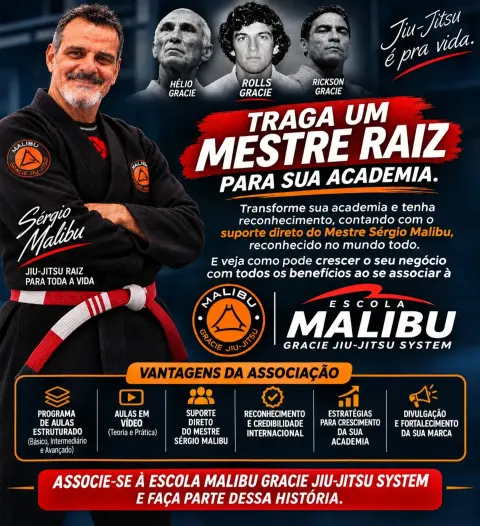
 Quer fazer parte traga sua academia e deixe eu te ajudar com um programa de aulas bem organizado e suporte vitalício.
 Tem lugares que se tornam nossos favoritos, e o Tropical Sushi é um deles!
Fotos no Instagram
@sergiomalibubjj


Timeline
Sérgio Malibu said he committed fully to jiu-jitsu after seeing Rickson Gracie easily beat the Hawaiian, the first time he saw jiu-jitsu in action, in the late 1970s. By his count, Rickson was about 17.
With Rickson GracieTold by Sérgio Malibu on Connect Cast · 0:01:36 · read the articleAccording to Sérgio Malibu, he started surfing at 13 at Arpoador, in the early 1970s, when he moved to Joaquim Nabuco street.
Told by Sérgio Malibu on Pura Connection · 0:03:24 · read the articleSérgio Malibu said that in 1978 he camped in Kauai, Hawaii, with Renan Pitanguy and other surfers.
With Renan PitanguyTold by Sérgio Malibu on Pura Connection · 0:31:56 · read the articleSérgio Malibu said he competed in his first tournament in 1980, after an internal elimination, because each academy only entered two athletes per weight and belt.
Told by Sérgio Malibu on Pura Connection · 0:19:10 · read the articleSérgio Malibu said he worked seven years with Indonesia after the shot, became an importer and went broke in 1995 to 1996, right when jiu-jitsu took off.
Told by Sérgio Malibu on Connect Cast · 0:47:16 · read the articleAccording to Sérgio Malibu, his last fight was in 2004, at 46. Crushed by a bigger opponent, he stepped out of the fighting area, refused to go back to the same position and was disqualified by referee Igor Gracie, Rolls' son.
With Igor GracieTold by Sérgio Malibu on Connect Cast · 1:29:40 · read the article
Stories told
According to Sérgio Malibu, he started jiu-jitsu very young, taken by his mother, with the Barreto family, but didn't adapt.
Told by Sérgio Malibu on Connect Cast · 0:01:05 · read the articleAccording to Sérgio Malibu, his surfing friend Júlio César, known as Foca, is now a coral belt jiu-jitsu teacher in the United States.
With Sérgio MalibuTold by Sérgio Malibu on Connect Cast · 1:19:13 · read the articleAccording to Sérgio Malibu, when he was still a blue belt he lost twice in training to Zé Paraíba, an older brown belt, and Rolls Gracie came over to tell him that now he would not get beaten up by anyone on the street.
With Sérgio MalibuTold by Sérgio Malibu on Connect Cast · 0:08:29 · read the articleSérgio Malibu said that, when Rolls Gracie died, some students stayed with Carlinhos and others went to Rickson. He went to Rickson, in an 11 a.m. to 1 p.m. class in Botafogo, near Colégio Padre Antônio Vieira.
With Rickson Gracie, Carlos Gracie Júnior, Rolls GracieTold by Sérgio Malibu on Connect Cast · 0:10:04 · read the articleAccording to Sérgio Malibu, Rolls Gracie was nine years older than him and worked as a mentor. After hearing Malibu talk about lança-perfume at Carnival in Cabo Frio, Rolls choked him at the Figueiredo Magalhães academy, in Copacabana, to show him the stars.
With Sérgio MalibuTold by Sérgio Malibu on Connect Cast · 0:59:15 · read the articleSérgio Malibu said Rudimar Fedrigo showed him, in the car, the video of a Royce Gracie fight against Sakuraba in three five-minute rounds. Malibu thought Royce won, and the victory was awarded to Royce.
With Royce Gracie, Sérgio MalibuTold by Sérgio Malibu on Connect Cast · 1:06:37 · read the articleSérgio Malibu said he was a Pan American, Rio state and Brazilian champion, and that he has almost 40 years as a black belt, after about seven years to get there.
Told by Sérgio Malibu on Connect Cast · 1:36:59 · read the articleAccording to Sérgio Malibu, he created the Hunter brand with a partner, gave the brand its name and later, with another brand, Hot Blue, sponsored Igor Vovchanchyn, paying 500 dollars per fight.
With Igor VovchanchynTold by Sérgio Malibu on Connect Cast · 1:09:45 · read the articleAccording to Sérgio Malibu, he and Marco Ruas were teachers at the Corpore academy, in Tijuca. Rivals at the time, they became friends, and it was Marco who comforted him on the day his mother died.
With Sérgio MalibuTold by Sérgio Malibu on Connect Cast · 1:41:35 · read the articleSérgio Malibu said Rudimar Fedrigo hosted him at Chute Boxe, showed techniques and, at the end of the visit, said he would have to promote him.
With Sérgio MalibuTold by Sérgio Malibu on Connect Cast · 1:44:42 · read the articleAccording to Sérgio Malibu, he worked at the academy of Romero Cavalcanti, Jacaré, before it was called Alliance.
With Sérgio MalibuTold by Sérgio Malibu on Connect Cast · 1:38:31 · read the articleSérgio Malibu said he sponsored Ronaldo Jacaré and that he was the last good athlete he sponsored.
With Sérgio MalibuTold by Sérgio Malibu on Connect Cast · 2:05:51 · read the articleAccording to Sérgio Malibu, Maurício Gomes was raised with him, was among Rolls Gracie's roughly six black belts, and the two once fought each other in an even match that was awarded to Malibu.
With Rolls Gracie, Sérgio MalibuTold by Sérgio Malibu on Connect Cast · 1:58:04 · read the articleOrlando Cani said Malibu and Jacaré also trained with him, when they were young, in the group tied to Alliance.
With Romero Cavalcanti, Orlando CaniTold by Orlando Cani on Pura Connection · 0:53:14 · read the articleAccording to Sérgio Malibu, the trouble began at São Conrado, when his surfboard, lent to his friend Foca, hit the head of a Hawaiian surfer, who broke the board with his fin. Malibu was 17 and the Hawaiian weighed 130 kilos.
Told by Sérgio Malibu on Pura Connection · 0:13:57 · read the articleSérgio Malibu said he only got into jiu-jitsu after seeing Rickson's fight with the Hawaiian, because that was when he understood the technique worked.
Told by Sérgio Malibu on Pura Connection · 0:17:33 · read the articleSérgio Malibu said he started training in Barra with Crolin Gracie, his first instructor, and that Álvaro Romano convinced him to train with Rolls Gracie, near where he lived, in Copacabana.
With Crolin Gracie, Álvaro Romano, Rolls GracieTold by Sérgio Malibu on Pura Connection · 0:12:22 · read the articleAccording to Sérgio Malibu, the students split the cost of fruit bought at Ceasa, and one of the meetings to divide the crates was in Bairro Peixoto, where Rolls Gracie lived.
With Sérgio MalibuTold by Sérgio Malibu on Pura Connection · 0:21:10 · read the articleSérgio Malibu said Jacaré, of Alliance, was one of the first to believe jiu-jitsu would have a future, at a time when Malibu taught just to have money to go out at night.
With Sérgio MalibuTold by Sérgio Malibu on Pura Connection · 0:07:06 · read the articleAccording to Sérgio Malibu, Royce Gracie, ten years younger, trained with him. Malibu saw Royce's growth, whom he describes as a skinny kid who believed in his father's mentorship.
With Sérgio MalibuTold by Sérgio Malibu on Pura Connection · 0:44:53 · read the articleSérgio Malibu said that, at a seminar in the South, someone said not to invite him because everything he showed was in Hélio Gracie's book. Since then he has tried to show modern techniques too.
With Hélio GracieTold by Sérgio Malibu on Pura Connection · 0:45:53 · read the articleAccording to Sérgio Malibu, jiu-jitsu classes in Copacabana used to last two hours, with warm-up, a standing portion, self-defense, ground work and sparring.
Told by Sérgio Malibu on Pura Connection · 0:53:43 · read the articleSérgio Malibu said he started doing deadlifts after Rogério Camões told him his lower back was like a crane.
With Sérgio MalibuTold by Sérgio Malibu on Pura Connection · 1:01:02 · read the articleSérgio Malibu said he keeps in touch with Crolin Gracie, his first teacher, and talks with him about spirituality.
With Sérgio MalibuTold by Sérgio Malibu on Pura Connection · 1:09:00 · read the articleAccording to Jorge Pereira, Rickson Gracie would go around the whole room in training submitting everyone, including Jorge, Marcelo Behring and Sérgio Malibu, without tiring.
With Marcelo Behring, Sérgio MalibuTold by Jorge Pereira on Connect Cast · 0:35:51 · read the articleAccording to Sérgio Malibu, Rolls Gracie showed up at the Ipanema pier, was called champion by the crowd and was the first fighter to hang out with the surfers.
With Sérgio MalibuTold by Sérgio Malibu on Pura Connection · 0:08:39 · read the articleSérgio Malibu said he was still a white belt at the time of Rickson Gracie's fight with the Hawaiian.
With Rickson GracieTold by Sérgio Malibu on Pura Connection · 0:48:43 · read the articleAccording to Sérgio Malibu, he was raised to compete against Carlson Gracie's students, who was preparing his team to face Hélio's sons.
With Carlson GracieTold by Sérgio Malibu on Pura Connection · 0:18:08 · read the articleSérgio Malibu said he has a large photo of Rolls Gracie on the academy wall and that he fought for a year with the master's shirt under his gi.
With Rolls GracieTold by Sérgio Malibu on Pura Connection · 0:22:14 · read the articleAccording to Sérgio Malibu, Jacaré, a student of Rolls Gracie, believed it was possible to be a jiu-jitsu instructor and rented a room near Arpoador. Fábio Santos and Tunico Bambu taught there, and Malibu stayed longer.
With Rolls Gracie, Fábio Santos, Sérgio MalibuTold by Sérgio Malibu on Pura Connection · 0:24:50 · read the articleSérgio Malibu said Jacaré's academy had no name at first and that he suggested Master. Later the name became Alliance.
With Romero CavalcantiTold by Sérgio Malibu on Pura Connection · 0:25:51 · read the articleAccording to Sérgio Malibu, when Rickson Gracie went to the United States he didn't want to stay at Royler's academy and began training with the Alliance crew.
With Rickson Gracie, Royler GracieTold by Sérgio Malibu on Pura Connection · 0:25:51 · read the articleSérgio Malibu said he was a three-time world champion when he was older, twice in his weight class and once in the absolute, as far as he remembers.
Told by Sérgio Malibu on Pura Connection · 0:55:26 · read the articleAccording to Antoine Jaoude, in 1999 or 2000 Sérgio Malibu, together with Sylvio Behring, invited him to spend three months teaching competitive wrestling to the team at Recreio Shopping.
With Sylvio Behring, Antoine JaoudeTold by Antoine Jaoude on Pura Connection · 0:18:35 · read the articleAccording to Sergio Zveiter, he fought Ricardo De La Riva as a black belt, ten minutes standing at Ilha do Governador, and De La Riva won. Before that, in a Gracie selection run by Rolls, he beat Malibu.
With Ricardo De La Riva, Sérgio MalibuTold by Sergio Zveiter on Pura Connection · 0:57:29 · read the articleAccording to Marinho Filho, Andrezinho, a student of Sérgio Malibu, was skinny and picked the strongest guys to fight, took their backs and put them to sleep.
With Sérgio MalibuTold by Marinho Filho on Muito Mais Ação Jiu-Jitsu · 0:29:59 · read the articleAccording to Feu, he met Sérgio Malibu through social media when he was leaving his old team to create FEU BJJ, and Malibu tested him in a training session before accepting the partnership.
With Sérgio MalibuTold by Feu on Pura Connection · 1:01:02 · read the articleFeu said Sérgio Malibu was raised alongside the Gracies and is now like a father to him.
With FeuTold by Feu on Pura Connection · 1:02:03 · read the articleFeu said Sérgio Malibu advises him not to roll at seminars, saying a seminar is for teaching.
With FeuTold by Feu on Pura Connection · 0:59:57 · read the articleAccording to Traveck, Sérgio Malibu told him that nobody brings a scale to a street fight, and on another occasion called him to roll while he was stretching, reminding him that on the street nobody waits for you to stretch.
With Rodrigo ThiagoTold by Rodrigo Thiago on Pura Connection · 0:13:27 · read the articleGigi Paiva said he met Malibu at Arpoador, that Malibu taught in the morning at Romero Jacaré's academy and that, at the first training session, Malibu gave him a beating.
With Sérgio Malibu, Romero CavalcantiTold by Alexandre Paiva on Pura Connection · 0:11:06 · read the articleAccording to Álvaro Romano, he met Sérgio Malibu around age 14, and the two lived on the same street for many years.
With Sérgio MalibuTold by Álvaro Romano on Muito Mais Ação Jiu-Jitsu · 0:03:11 · read the article
Lineage
Promoted by Carlos Gracie Júnior (purple belt).
Every claim on this page belongs to whoever told it in the interviews, not to this site. Different versions of the same fact appear side by side. Ask for a correction.