
Biography
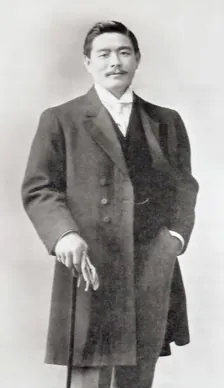
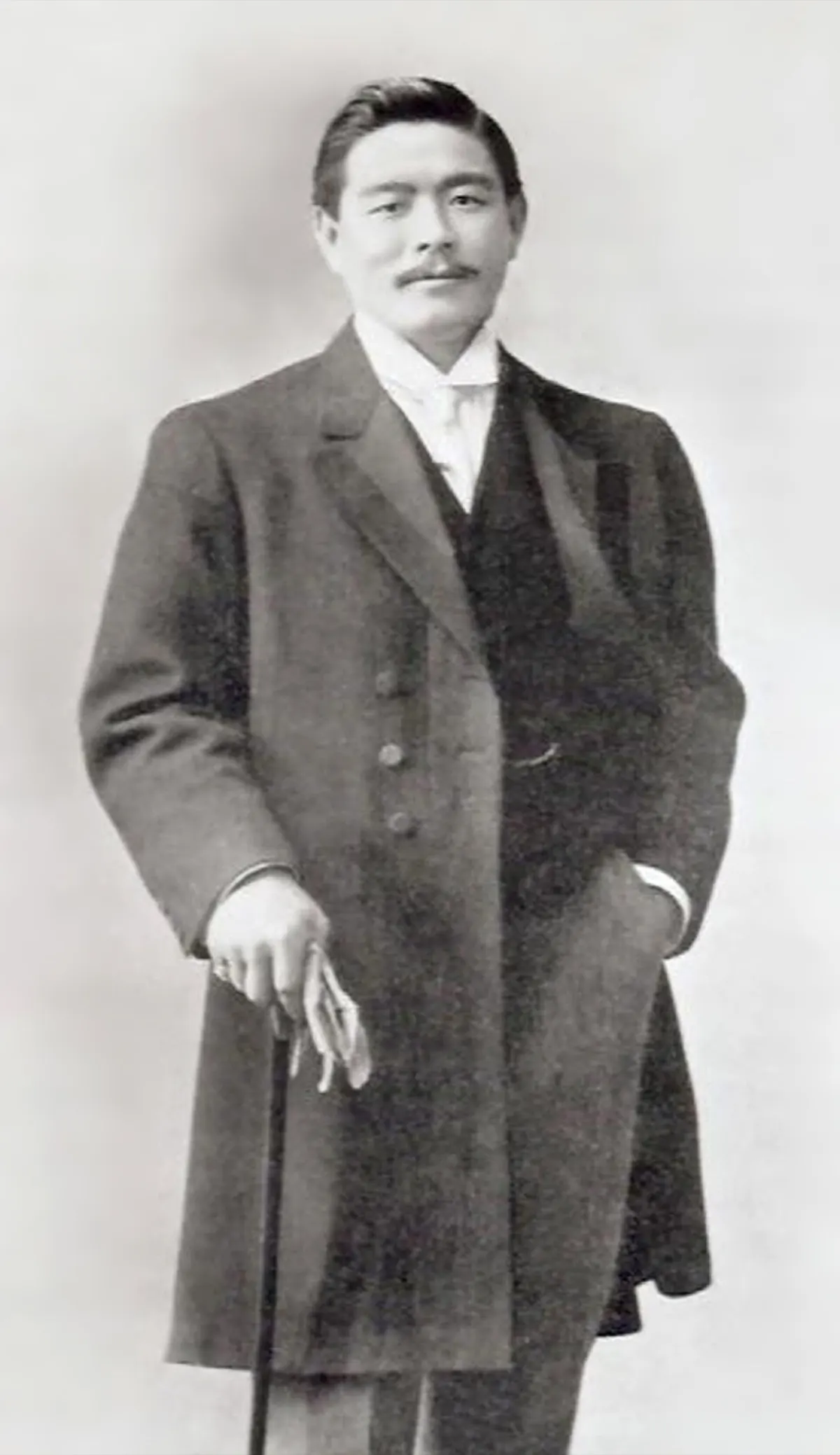
Mitsuyo Maeda
Mitsuyo Maeda, known as Count Koma, was a Japanese judoka who settled in Brazil and is traditionally named as the teacher of Carlos Gracie. That is precisely the point that divides those who tell the story the most.
Pedro Valente says Tsunejiro Tomita, the first Kodokan black belt, took Maeda to the West in 1904. Later Maeda split from him, started using the name jiu-jitsu, taught in England and, alongside Yukio Tani, adapted the fighting style to face boxers, with an emphasis on the guard. Around 1908 or 1909 he wrote a book with dietary precepts similar to the ones Carlos Gracie adopted.
About the lessons, the versions differ. Pedro Valente says Maeda taught Carlos, Oswaldo and Gastão in Belém, and that Carlos told this until he died. Francisco Mansur says he has a photo of Carlos taking a lesson with Count Koma, who lived in the house of Gastão Gracie in Pará. Robert Drysdale says there is no evidence: Carlos's documented teacher was Jacyntho Ferro, a student of Maeda, and the only testimony from outside the family, that of Takeo Yano, comes from someone who only arrived in Brazil in 1934. Pedro Valente himself cites a Belém newspaper that names Carlos as a student of Jacyntho.
Drysdale describes Maeda as a traditional judoka, a specialist in throws and not groundwork, who trained five students in Brazil, none of them a Gracie. To him, Maeda is a footnote. Rickson sees it differently: the efficiency of jiu-jitsu arrived in Brazil with Maeda, and the Gracies mixed it with Brazilian competitive grit.
Biography compiled by Gabriel Guimarães from 20 interviews · updated Nov 21, 2026
Momentos históricos e lutas
Timeline
According to Pedro Valente, Tsunejiro Tomita, the Kodokan's first student and first black belt, took Mitsuyo Maeda to the West in 1904 and, in New York, declared that jiu-jitsu was primitive and uncivilized.
With Mitsuyo MaedaTold by Pedro Valente on Connect Cast · 0:43:33 · read the articleAccording to Pedro Valente, Carlos Gracie said from the 1920s until his death that he had been Maeda's student, and not even his rival Yano, who took the Gracies' job at the Navy, contested it; Yano called Carlos a disciple of Maeda.
With Mitsuyo Maeda, Takeo YanoTold by Pedro Valente on Connect Cast · 2:28:00 · read the articleAccording to Pedro Valente, an interview given to a São Paulo newspaper in the 1930s points to Sakujiro Yokoyama, from the Tenjin Shin'yo-ryu school, as Mitsuyo Maeda's main teacher.
With Mitsuyo MaedaTold by Pedro Valente on Connect Cast · 0:32:00 · read the articleFrancisco Mansur said he visited Maeda's grave in Belém in 1970 and that, years later, Lyoto Machida's father restored the grave, which had been damaged by a flood.
With Lyoto Machida, Francisco MansurTold by Francisco Mansur on Pura Connection · 0:29:40 · read the articleRobert Drysdale said Takeo Yano stated in 1979 that Carlos Gracie was Maeda's student, about events from 1916 to 1921, but that Yano only arrived in Brazil in 1934, and so would not be a witness.
With Carlos Gracie, Mitsuyo MaedaTold by Robert Drysdale on Pura Connection · 0:18:08 · read the articleAccording to Robert Drysdale, there is no evidence that Carlos Gracie took lessons from Maeda. The only almost convincing testimony from outside the family is Takeo Yano's, from 1979, but Yano only arrived in Brazil in 1934.
With Mitsuyo Maeda, Takeo YanoTold by Robert Drysdale on Connect Cast · 3:00:59 · read the article
Stories told
Oswaldo Simões told the version he heard from Robson Gracie: Gastão Gracie stayed in Amazonas after his ship to the United States broke down, set up a circus and hired Mitsuyo Maeda to teach Carlos Gracie.
With Mitsuyo Maeda, Carlos Gracie, Robson GracieTold by Oswaldo Simões on Pura Connection · 0:32:33 · read the articleAccording to Oswaldo Simões, the story that the Kodokan reprimanded Maeda for charging admission to demonstrations is a legend: he searched in Japan in 1981 and 1982 and found no document.
Told by Oswaldo Simões on Pura Connection · 0:42:30 · read the articleAccording to Pedro Valente, Hélio Gracie was an expert in kicking and trained good boxing, Carlson was also strong in kicks and punches, and Maeda was already talking about open-finger gloves for vale-tudo fights.
With Carlson Gracie, Mitsuyo MaedaTold by Pedro Valente on Pura Connection · 1:13:47 · read the articleAccording to Francisco Mansur, he has a photograph of Carlos Gracie taking a lesson from Count Koma, who lived in Gastão Gracie's house in Pará.
With Carlos Gracie, Gastão GracieTold by Francisco Mansur on Pura Connection · 0:23:54 · read the articleAccording to Guilherme Valente, the brothers found a book by Mitsuyo Maeda that already talked about eating fruits and vegetables and respecting the digestive interval, ideas that certainly influenced young Carlos Gracie.
With Carlos GracieTold by Guilherme Valente on Pura Connection · 1:17:01 · read the articleAccording to Reila Gracie, Carlos learned jiu-jitsu from Count Koma, and the younger brothers learned in Rio from Jacyntho Ferro, Koma's assistant.
With Mitsuyo Maeda, Jacyntho FerroTold by Reila Gracie on Connect Cast · 0:33:04 · read the articleAccording to Rickson Gracie, the efficiency of jiu-jitsu came to Brazil with Maeda, and the Gracie family blended that jiu-jitsu with the Brazilian competitive personality.
With Rickson GracieTold by Rickson Gracie on Pura Connection · 1:13:39 · read the articleAccording to Pedro Valente, Mitsuyo Maeda wrote a book around 1908 or 1909, before arriving in Brazil, with eating precepts similar to the ones Carlos Gracie adopted.
With Carlos GracieTold by Pedro Valente on Connect Cast · 0:10:54 · read the articleAccording to Pedro Valente, Mitsuyo Maeda taught the brothers Carlos, Oswaldo and Gastão Gracie in Belém do Pará and wrote a book with a chapter on nutrition and health care.
With Carlos Gracie, Oswaldo Gracie, Gastão GracieTold by Pedro Valente on Pura Connection · 0:13:34 · read the articlePedro Valente believes Carlos Gracie was inspired by Mitsuyo Maeda to study nutrition and health, and that he organized these elements into the philosophy the family follows.
With Mitsuyo MaedaTold by Pedro Valente on Pura Connection · 0:14:06 · read the articleAccording to Pedro Valente, Tsunejiro Tomita, Kano's first black belt, took Maeda to the West to take on challenges, and Maeda, alongside Yukio Tani, adapted jiu-jitsu to fight boxers and wrestlers, with an emphasis on the guard.
With Tsunejiro Tomita, Yukio TaniTold by Pedro Valente on Pura Connection · 1:09:33 · read the articleAccording to Robert Drysdale, Maeda trained five students in Brazil, among them Jacyntho Ferro, and none of them was a Gracie. He says they were very likely promoted to black belt, though he is not certain because of the language of the newspaper of the time.
With Jacyntho FerroTold by Robert Drysdale on Pura Connection · 0:08:28 · read the articleAccording to Robert Drysdale, Maeda was a traditional judoka and a takedown specialist, not a groundfighter; a personal letter of his would make this clear.
Told by Robert Drysdale on Pura Connection · 0:25:20 · read the articleAccording to Vinicio Antony, Carlos Gracie learned jiu-jitsu from Mitsuyo Maeda, a judoka and student of Jigoro Kano, at a time when judo still had strikes, throws and ground work.
With Mitsuyo Maeda, Jigoro KanoTold by Vinicio Antony on Pura Connection · 0:29:49 · read the articleRobert Drysdale said Maeda was a Kodokan member, with no diploma from another school, and that he had problems with the Kodokan because of the professional fights.
With Jigoro KanoTold by Robert Drysdale on Pura Connection · 1:04:19 · read the articleRobert Drysdale said he starts the history of Brazilian jiu-jitsu with Carlos Gracie; Jacyntho Ferro, Carlos's documented instructor, and Maeda came before, but are not more important than him.
With Jacyntho Ferro, Mitsuyo MaedaTold by Robert Drysdale on Pura Connection · 1:21:26 · read the articlePedro Valente said Mitsuyo Maeda split from Tomita, started using the name jiu-jitsu, taught in England at the same academy as Taro Miyake and opened an academy in Brazil called jiu-jitsu.
With Taro Miyake, Tsunejiro TomitaTold by Pedro Valente on Connect Cast · 0:44:04 · read the articlePedro Valente said a Belém newspaper mentions Carlos Gracie and Donato Pires dos Reis at a demonstration with Maeda present, as students of Jacyntho Ferro, Maeda's main student and the instructor at his academy.
With Jacyntho Ferro, Mitsuyo Maeda, Donato Pires dos ReisTold by Pedro Valente on Connect Cast · 2:25:54 · read the articleAccording to Vinicio Antony, Maeda taught Carlos and Hélio Gracie the punching, elbow, stomp and knee techniques that are part of Kodokan judo, and the Gracies developed jiu-jitsu on top of that until it became a sport.
With Carlos Gracie, Hélio GracieTold by Vinicio Antony on Pura Connection · 0:56:22 · read the articleAccording to Francisco Mansur, Oswaldo Fadda's lineage comes from Luiz França, who was a student of Mitsuyo Maeda in Pará. He states that Fadda never faced another martial art.
With Luiz França, Mitsuyo MaedaTold by Francisco Mansur on Connect Cast · 1:29:16 · read the articleRobert Drysdale stated that Carlos Gracie's instructor was Jacyntho Ferro, a student of Maeda, and that this is recorded in the newspapers of the time.
With Carlos Gracie, Mitsuyo MaedaTold by Robert Drysdale on Connect Cast · 3:01:31 · read the articleAccording to Robert Drysdale, Maeda had five students in Brazil, and Jacyntho Ferro was the most famous and consistent of them, the one who drove the training.
With Jacyntho FerroTold by Robert Drysdale on Connect Cast · 3:02:02 · read the article
Every claim on this page belongs to whoever told it in the interviews, not to this site. Different versions of the same fact appear side by side. Ask for a correction.